The first sign always shows up on a Tuesday in late March. Par levels on fitted king sheets slip by six units overnight. Nobody panics, yet. By Thursday the overflow closet on the 14th floor starts emptying, and by Friday afternoon the housekeeping supervisor is texting me a photo of a half-stocked linen cart two hours before checkout. That was my old property in Midtown, and the pattern didn't change across any of the six years I ran operations there.
Here's the thing most GMs won't admit: NYC's peak season arrives the week after Easter, not in June. And if your linen program isn't already built for surge capacity by April 15, you're going to spend the next six months chasing your tail.
I've consulted with hospitality groups, property management firms, and restaurant operators across this city, and the single biggest operational failure I see every year is the same one. Teams prepare for "summer tourism" as if it's a single event. This is actually a stacked calendar of compounding pressures, Tribeca Film Festival, Fleet Week, US Open, UN General Assembly, the Marathon, each one hitting while the previous one is still unwinding.
This is the 2026 playbook I wish I'd had when I was in-house. It maps the calendar, flags the warning signs, and lays out the month-by-month moves. If you're running a commercial laundry program at any scale in this city, this is where to start.
The Bottom Line
NYC's peak season breaks in-house laundry in three predictable ways: capacity caps (your machines can't absorb a 40% volume spike), par-level drift (backup inventory runs out faster than rotation can refill it), and delivery-window slip (one late truck cascades into a missed housekeeping turn). The hotels and property groups that stay ahead don't work harder in July, they restructure their vendor relationship in April. A commercial partner like MD Cleaners NYC builds surge protocols into the base contract so you never negotiate capacity in the middle of a crisis. That's the difference between a smooth season and a six-month fire drill.
Why the NYC Calendar Breaks In-house Laundry
Look at a 2026 NYC event calendar and you see the problem immediately. Tribeca Film Festival runs early June. Fleet Week lands late May. The US Open takes over Queens from late August through early September. UN General Assembly blocks Midtown in late September. Throw in the Marathon in November, Restaurant Week in January and July, the Met Gala in May,. And a tourism forecast that NYC Tourism + Conventions projects near 68 million visitors for the year, and you've got roughly seven months where volume doesn't dip.
Hotels feel this first, but they aren't the only ones. Property management firms running doorman buildings across the Upper West Side and Tribeca see uniform rotations compress. Restaurants doing 180-plus covers a night burn through chef coats and napery twice as fast. Even healthcare facilities, urgent care, outpatient surgery, long-term care, see scrub demand climb as staffing expands to cover summer PTO.
What does that mean for your in-house setup? It means the washer-dryer pair your facilities team bought five years ago was sized for a 40-room average, not a 95%-occupancy July. Machines run hotter, longer, and wear out faster. Chemistry gets skipped because the laundry attendant is one person trying to finish three shifts of work. Quality drops right as guest expectations peak.
According to the American Hotel & Lodging Association, guest satisfaction scores correlate directly with linen quality, and the gap widens during peak travel periods, when repeat travelers compare properties head-to-head. The Drycleaning & Laundry Institute's capacity research backs this up: peak-season commercial laundry volume in urban markets runs 35 to 55% above baseline. That's not a rounding error. That's a structural mismatch between how in-house programs are designed and what NYC actually demands seven months a year.
The 4 Warning Signs Your Linen Program is About to Fail
Notice these early. If any two of them show up in the same week, you're already behind.
1. Par-level drift without a clear cause. You counted 480 fitted king sheets in February. By mid-April you're down to 423 and nobody can tell you which rooms they're in. This is cycle slip, items are either in a wash pile that didn't get processed, lost in transit between floors, or sitting in a maintenance closet because someone pulled them mid-rotation. If you don't have item-level tracking, you won't catch it until you're short on a Friday.
2. Housekeeping "creative sourcing." When your floor supervisor starts pulling sheets from the VIP closet to stock standard rooms, that's a signal. I've seen it happen in properties doing $400 ADR, and it's almost always the first domino before a guest complaint.
3. Uniform rotation compression. Property managers: if doormen are wearing the same shirt two days in a row, your vendor is slipping. Ask when the last delivery was. Ask when the next one's coming. If either answer is vague, your rotation has already broken.
4. Restaurant napery recovery time climbing. A restaurant doing 150 covers should have napkins back on a 36-hour cycle. When that stretches to 48, and 48 becomes 72, you're watching an in-house program (or a small retail cleaner) hit capacity. The next step after that is the FOH manager quietly buying cheap replacements at restaurant supply, which wrecks your fabric consistency.
Catch any of these in April. Don't wait until May, because by then the fix is twice as expensive.
The Month-by-Month Playbook (April -> October)
Try this approach. Each month has one strategic move and one tactical move. If you run both in parallel, you won't hit September scrambling.
April: Audit and Contract
Strategic: Run a full inventory audit. Count every linen, uniform, and napery item against the par-level baseline you set in January. Flag anything over 8% variance.
Tactical: If you're on a vendor contract with no surge clause, renegotiate now. Every commercial laundry in this city is at its lightest capacity right now, April is the only month you have real leverage.
May: Stress Test
Strategic: Intentionally push a high-volume week through your system the week before Memorial Day. If something breaks, you want to know in May, not July.
Tactical: Lock in your backup vendor. Most ops teams rely on a single partner. I've watched that single-point-of-failure cost a property six figures in reputation damage over one bad weekend.
June: Cluster-Event Prep
Strategic: Tribeca Film Festival runs this month. UN delegation pre-planning starts. Review your staff rotation and build a written escalation path for the housekeeping supervisor so decisions don't bottleneck on the GM.
Tactical: Shift your main delivery window earlier. If your vendor's hitting the loading dock at 8 AM, negotiate down to 6 AM. That extra two hours matters when housekeeping turns start at 9.
July: Hold the Line
Strategic: This is execution month. Don't change systems. Don't swap chemistry. Don't retrain staff. Just run.
Tactical: Weekly par-level reviews, Monday morning, no exceptions. Ten minutes with the housekeeping supervisor. You're looking for drift, not perfection.
August: US Open Surge
Strategic: Queens properties feel this most, but Manhattan hotels with corporate travel packages see it too. If you've got any capacity constraint, this is when it shows.
Tactical: Add a mid-week extra pickup for high-volume properties. One extra delivery on Wednesday often kills the Friday crisis before it starts.
September: UNGA and Conference Compression
Strategic: UN General Assembly brings diplomatic delegations that cycle through rooms faster than leisure guests. Turnover rate doubles. Plan for it.
Tactical: Brief your vendor on your VIP protocols. If the President of a member state is in suite 2801, you don't want a rookie driver on that delivery.
October: Decompress and Document
Strategic: Marathon is early November, so this is the month to document what worked and what didn't across the summer. That document becomes your 2027 playbook.
Tactical: Start the 2027 vendor conversation in October. Multi-year contracts negotiated in fall always land better rates than ones pushed in January.
Why Commercial Partnerships Outperform In-house During Peak
Start here. An in-house laundry has three hard ceilings: machine capacity, labor capacity, and chemistry consistency. All three degrade under surge. A commercial partner built for NYC volume doesn't hit those ceilings because the infrastructure was designed for it from the start.
Think about what changes when you shift from in-house to a commercial operation:
- Capacity scales with demand: , not with the size of a basement equipment room. MD Cleaners' main facility at 2220 White Plains Road processes volume that no hotel could replicate on-site.
- Labor is somebody else's staffing problem.: You're not hiring laundry attendants or managing call-outs during peak weekends.
- Chemistry is standardized: across every load. A commercial laundry uses calibrated chemistry, temperature-controlled cycles, and RFID or barcode tracking that tells you exactly where every item is in the process.
- Routing is the vendor's job.: Delivery windows, loading-dock timing, Manhattan traffic routing, those become logistical problems the vendor solves, not ops overhead you carry.
The hotels I've seen make this transition successfully share one habit: they don't treat the vendor like a replaceable line item. They treat them like infrastructure. That's the mental shift that changes the relationship.
How MD Cleaners Handles Peak Capacity
I covered MD Cleaners' general operation in the operational case I made earlier. Here's what's specific to peak season.
Surge-ready routing. During peak weeks, MD Cleaners adds supplemental routes across Manhattan and the outer boroughs. If your hotel in Midtown normally gets a 6 AM daily delivery, they'll add a second evening pickup during Tribeca Film Festival week without you having to renegotiate.
Barcoded inventory across surge volume. Every sheet, towel, and uniform keeps its barcode through a 40% volume spike. Nothing falls off the tracking grid. When you're cycling 6,000 pieces a week instead of 4,200, that tracking discipline is what separates a clean operation from a chaotic one.
Dedicated account managers during peak. You're not calling a 1-800 line. You have one person, who already knows your property, your loading dock access, your housekeeping rotation, and they're the one coordinating surge protocol.
Overflow capacity for event-driven spikes. A hotel near the US Open grounds in Flushing might see 1,000-plus piece spikes on a Thursday night in late August. MD Cleaners processes that overflow without pushing it back onto your backup vendor or your in-house closet. That's the whole point of picking a partner built for this market.
Multi-property consolidated billing. If you're running a portfolio, five doorman buildings on Park Avenue, three hotels in Midtown, a restaurant group across four locations, one invoice instead of twelve is a real operational gain. I've watched finance teams waste 15 hours a month reconciling vendor statements. That's 180 hours a year.
Your 30-day Prep Checklist
Run this sequence between now and late May. This is the shortest path to a clean peak season.
1. Week 1: Full linen/uniform inventory audit. Document every variance. 2. Week 1: Pull your current vendor contract. Highlight the surge clause (or confirm it doesn't exist). 3. Week 2: Schedule a vendor walkthrough. If your current vendor won't commit to peak-season SLAs in writing, start a parallel conversation with MD Cleaners. 4. Week 2: Stress-test your chemistry. Run a 48-hour window at 110% normal volume and see what breaks. 5. Week 3: Confirm delivery windows for May and June. Negotiate any window that's cutting too close to housekeeping turns. 6. Week 3: Brief your housekeeping supervisor on the escalation path. Who calls whom when a delivery slips? 7. Week 4: Document everything. The playbook you write in late April becomes the one you ship to your 2027 ops team.
Do this now. Don't wait. Every week you delay in April costs three weeks of catch-up in July.
How to Get Started
If you're ready to restructure your commercial laundry program before peak hits, here's the path:
1. Request a consultation at mdcleanersnyc.com/enterprise or call (914) 299-2200. 2. Schedule a walkthrough: Their team visits your property, audits your volume, and maps delivery logistics against your building access windows. 3. Receive a peak-season program: Pricing and surge protocols are built around your specific operation. 4. Launch with a dedicated account manager: One person owns your account from day one, through every event on the 2026 calendar.
Ready to stop absorbing peak-season risk with in-house capacity? Request a free enterprise consultation from MD Cleaners NYC. The April conversation is a different conversation than the July one, and the July one is always more expensive.
Frequently Asked Questions
When does NYC's peak commercial-laundry season actually start?Mid-April, not June. Spring leisure travel picks up the week after Easter, Tribeca Film Festival hits in early June, and the compounding effect of conferences and events means volume doesn't dip meaningfully until mid-October. Properties that prepare in April stay ahead. Properties that wait until Memorial Day are already playing catch-up.
Can a commercial dry cleaner actually handle a 40% volume spike?A commercial operation built for NYC volume, yes. A retail dry cleaner or a regional vendor without NYC-specific infrastructure, usually not. Ask two questions: What's your peak-season SLA in writing? And can you show me capacity at 140% of my normal weekly volume? If either answer is vague, keep looking.
Should I keep an in-house backup laundry for peak season?Only if you've stress-tested it at surge volume. Most in-house setups work fine at baseline and fail at peak, exactly the moment you need them. A smarter backup is a secondary commercial vendor agreement so you have overflow capacity without the infrastructure cost.
How much lead time do I need to negotiate a peak-season contract?For a May, October peak, start conversations in February. For 2026, you're in the window right now, April is the last month you'll have vendor negotiating leverage before the summer lock-in. May onward, every commercial laundry in this city is running at 90%-plus capacity and pricing reflects that.
Do commercial laundries offer real surge pricing, or is it just a marketing term?Real programs have surge clauses spelled out in the contract: guaranteed capacity, guaranteed delivery windows, defined overage pricing, and written SLAs. Marketing-only "surge capacity" means you'll pay more and still wait longer when volume spikes. Ask for the clause in writing.
Does peak season affect uniform programs the same way it affects linens?Yes, but differently. Uniform rotations compress because staff hours expand, hotels hire seasonal housekeeping, restaurants add summer servers, property managers extend doorman shifts. More staff, same uniform pool, tighter rotation. If you haven't reviewed your uniform par levels since January, do it this week.
What's the one thing most ops teams miss in peak-season prep?Delivery window timing. Everyone focuses on volume and pricing. The detail that actually breaks operations is when the truck hits the loading dock. A 6 AM delivery and an 8 AM delivery are different businesses. Negotiate the window before you negotiate anything else.
Sources:
- American Hotel & Lodging Association - Guest Satisfaction Research
- Drycleaning & Laundry Institute - Commercial Capacity Standards
- NYC Tourism + Conventions - 2026 Visitor Forecast
- NYC Hospitality Alliance - Industry Overview
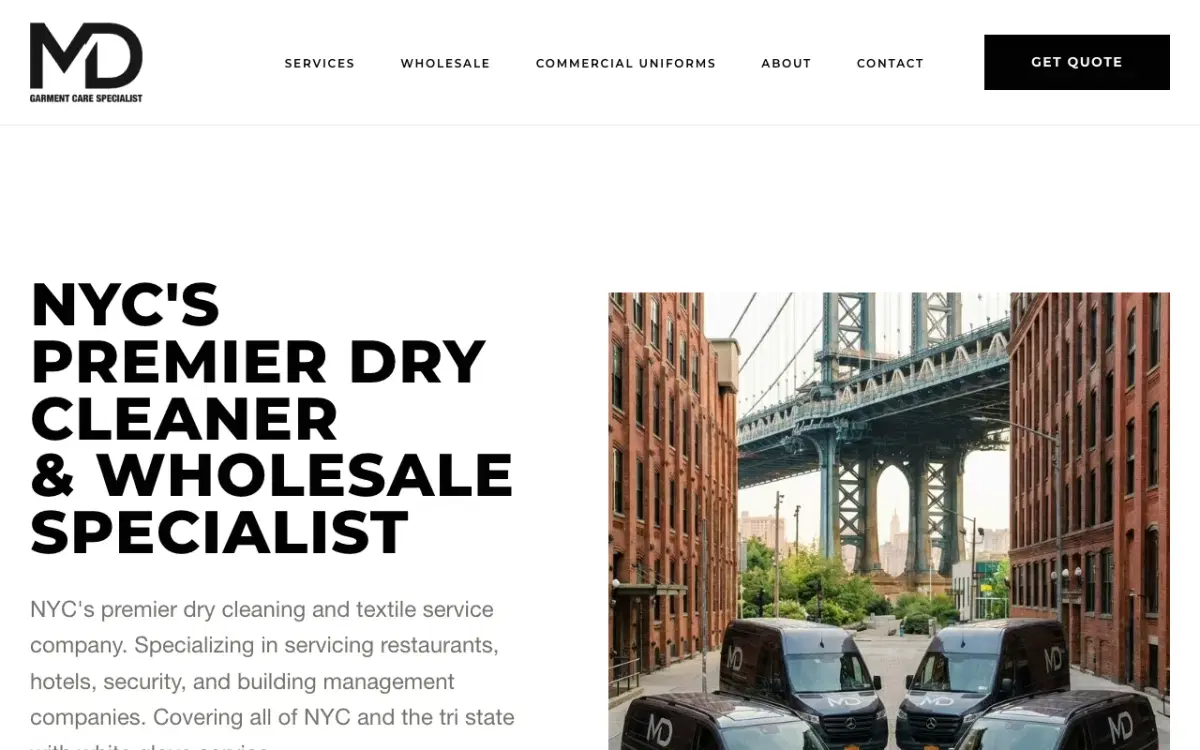
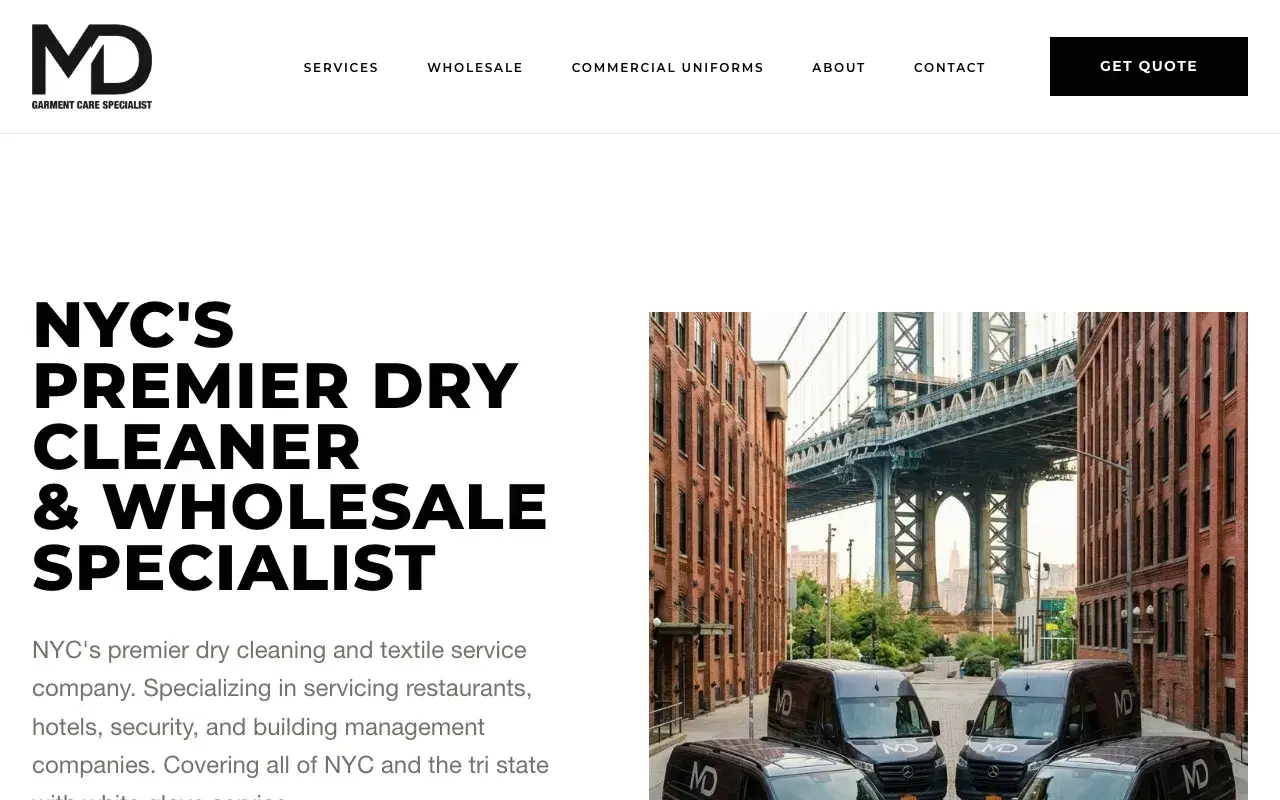
Check out their live website and see the work for yourself: MDCleanersNYC.com